

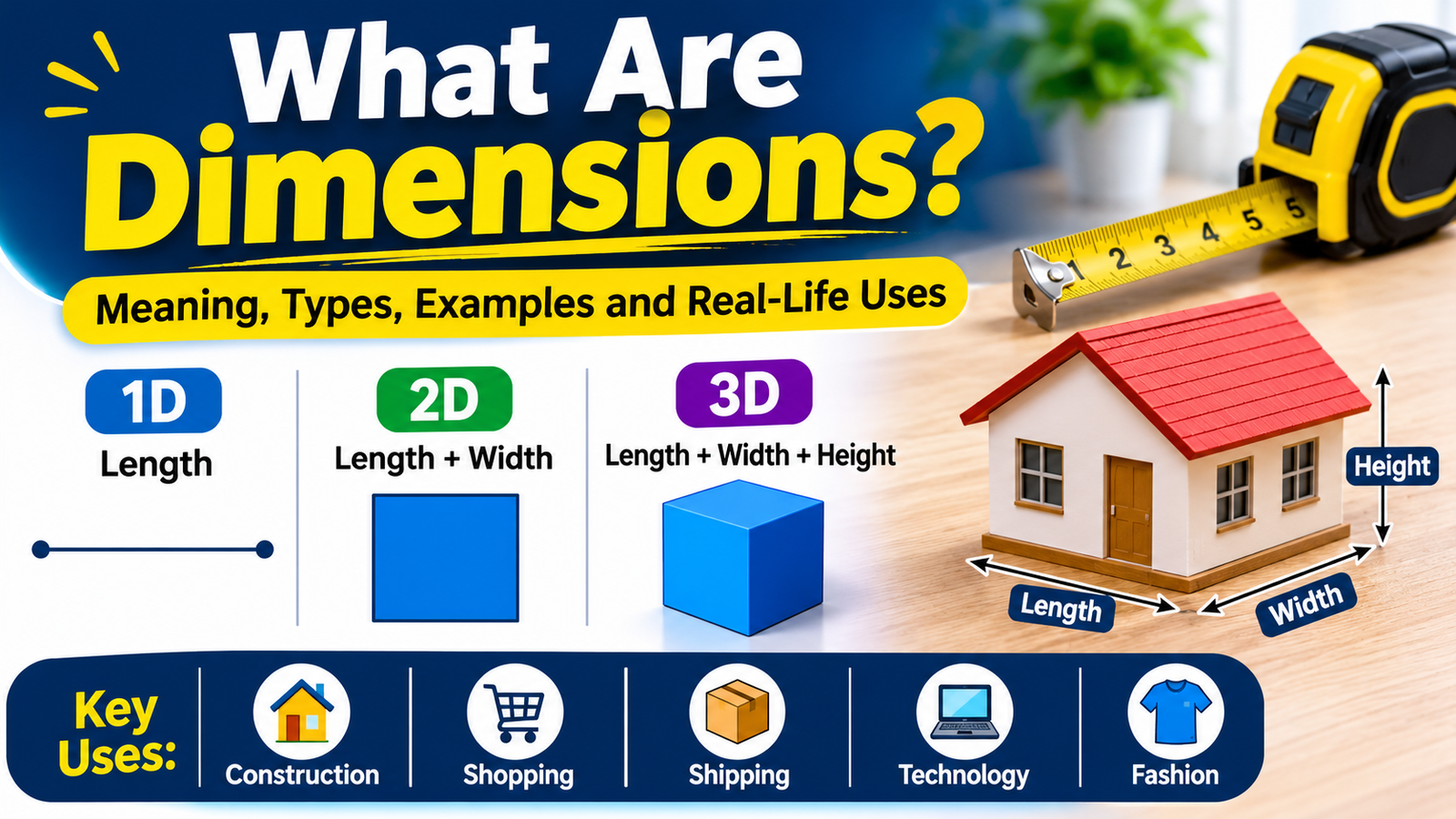
In many fields such as mathematics, science, geometry, architecture, engineering and even in our daily lives we deal with dimensions. They are used to express the size, shape, location, and dimensions of various items. It is whether you want to measure the length of a room, check how high a table is, design a building, or buy some furniture; dimensions will give you a clear idea about what type of item it is physically.
Dimensions are measurements that indicate how large or far away something is from us. There are many different types of dimensions, including those that measure physical objects, such as length, width, and height. Dimensions can also be used to define space, time, and other types of mathematics.
In this article, I am going to explain to you what the word “dimensions” means, the various types of dimensions that exist, some real-world examples of dimensions, and how we use them in our daily lives.
What Are Dimensions?
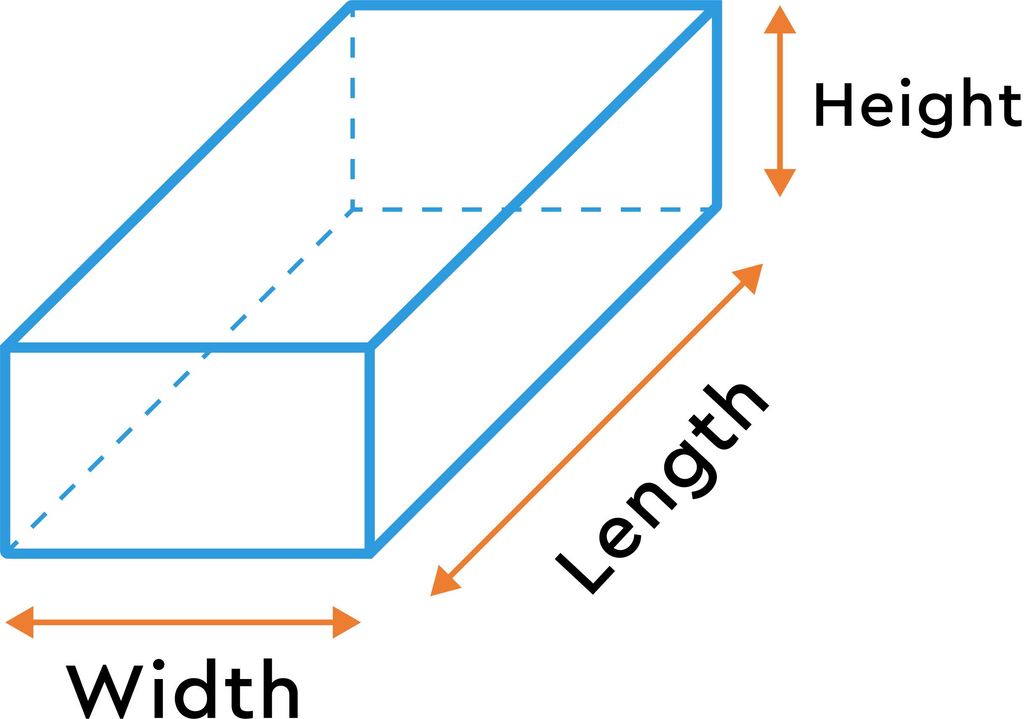
Dimensions are numerical values that represent the magnitude of a physical property (such as length, width, height, etc.) of a given object or region. These values enable people to quantify the physical properties of objects and regions. In order to express these values in a standard format, dimensions are typically reported in various units of measurement (e.g., millimeters, centimeters, meters, inches, feet, kilometers).
For instance, if you have a rectangular table that has a length of 120 cm, a width of 60 cm, and a height of 75 cm then these are the three measurements which represent its size (dimensions).
Dimensions in mathematics are also defined as the number of different ways to locate a point in a given region. One way to define a dimension is by the number of different coordinates you would need to specify a single location in a region. For example, to identify a specific location along a line, you only need one coordinate (the distance from the start of the line). To identify a specific location on a flat surface, you will need two coordinates (the distances from both of the edges). And to identify a specific location inside a solid object, you will need three coordinates (the distances from each of the three faces).
Dimensions have different meanings based on what field you’re studying. Geometry defines spatial dimensions. Physics includes spatial dimensions, plus time and possibly other physical properties.
What Are the Three Main Dimensions?
The three main dimensions used to measure physical objects are length, width, and height. Together, they help describe the complete size of a three-dimensional object.
1. Length
Length refers to the measurement of an object from one end to the other. It generally represents how long something is.
For example, if a dining table measures 150 cm from one end to the other, its length is 150 cm. Length is commonly used when measuring roads, furniture, rooms, clothing, and construction materials.
2. Width
Width describes how wide an object is from one side to another. It is usually measured perpendicular to the length.
For example, if a rectangular mattress measures 190 cm in length and 90 cm in width, its width is 90 cm.
Width is important when determining whether furniture, appliances, or other objects will fit into a particular space.
3. Height
Height refers to the vertical measurement of an object, generally from its bottom to its top.
For example, if a refrigerator is 180 cm tall, its height is 180 cm.
Height is commonly used to measure buildings, doors, people, furniture, walls, and other vertical structures.
What Are the Different Types of Dimensions?
Dimensions can be classified into different types depending on how they describe space and objects. The most common classifications are one-dimensional, two-dimensional, and three-dimensional.

1. One-Dimensional (1D)
One-dimensional objects have only one measurable direction, which is length. They do not have measurable width or height in the ideal mathematical sense.
A straight line is a common example of a one-dimensional object. It extends in one direction and can be measured using units such as centimeters or meters.
Other examples include a number line and an ideal geometric line segment.
2. Two-Dimensional (2D)
Two-dimensional objects have two measurable directions: length and width. They have a flat surface but no thickness in ideal geometry.
Common examples of two-dimensional shapes include squares, rectangles, circles, and triangles.
For example, a rectangular sheet of paper can be described by its length and width. These measurements help calculate its area.
3. Three-Dimensional (3D)
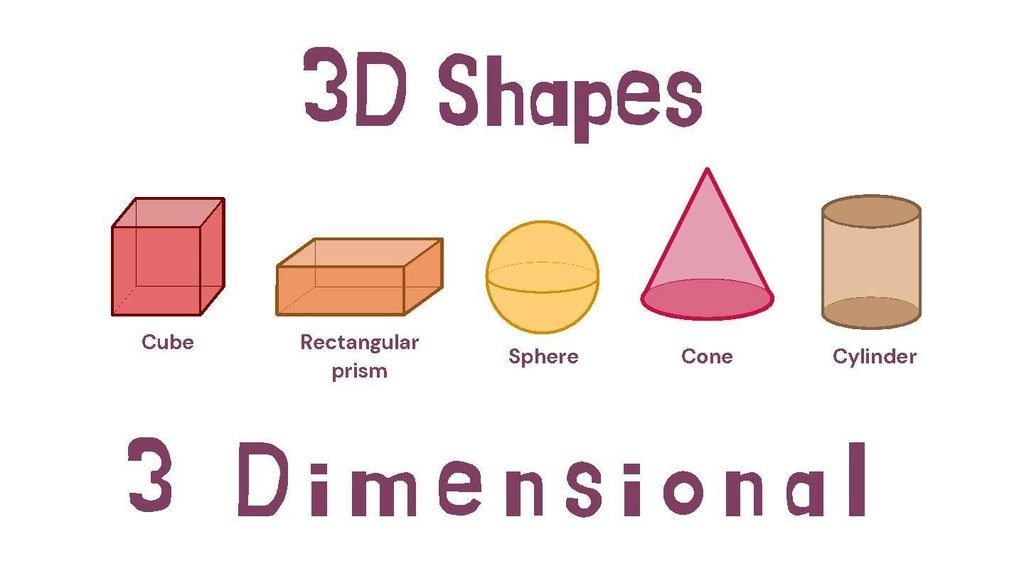
Three-dimensional objects have three measurable directions: length, width, and height. They occupy physical space and have volume.
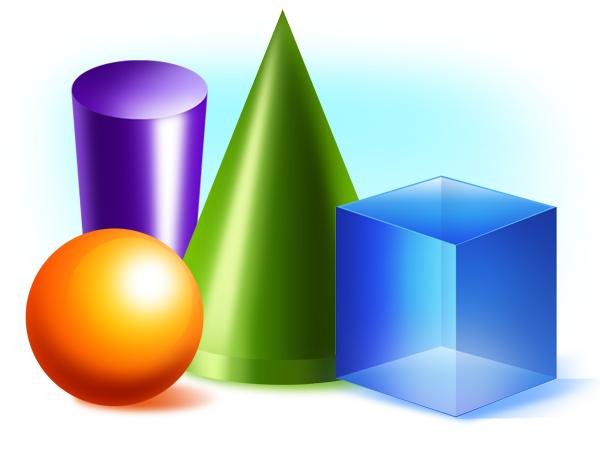
Examples include cubes, boxes, cylinders, spheres, buildings, and furniture.
A cardboard box, for example, may have dimensions of 30 cm × 20 cm × 15 cm. These measurements represent its length, width, and height.
What Are Dimensions in Mathematics?
In mathematics, dimensions describe the number of independent coordinates needed to identify a point in a particular space.
For example, a point on a straight line requires one coordinate, while a point on a flat surface requires two coordinates.
In a three-dimensional space, three coordinates are needed to identify a position.
| Dimension | Meaning | Example |
| 1D | One direction | Straight line |
| 2D | Two directions | Square or rectangle |
| 3D | Three directions | Cube or sphere |
| 4D | Four coordinates | Mathematical four-dimensional space |
Dimensions are also important in geometry because they help calculate area, volume, distance, and other mathematical properties.
What Are Dimensions in Physics?
Dimensions in physics are a way of describing what a quantity actually is (its “nature”). They allow for comparison of different types of physical quantities, like length, mass, time, temperature, and speed.
In addition, for instance, distance is expressed in meters, time in seconds and mass in kilograms.
Dimensional analysis is used by physicists as a means of checking the consistency of mathematical expressions. It can be applied in many areas of science including, but not limited to, mechanics, electricity, and thermodynamics.
Space and time have become significant ideas in contemporary physics. In his theory of relativity, Einstein suggested that space and time were related to each other as a four-dimensional spacetime, which includes three dimensions of space and one dimension of time.
What Are Dimensions of an Object?
The dimensions of an object refer to its physical measurements. These measurements usually include length, width, and height, depending on the object’s shape.
For example, consider a wooden cupboard with the following measurements:
- Length: 120 cm
- Width: 50 cm
- Height: 180 cm
Its dimensions are 120 × 50 × 180 cm.
Knowing these measurements is important before purchasing furniture, transporting goods, arranging rooms, or planning storage spaces.
Different objects may require different measurements. A circular object, for example, may be described by its diameter and height, while a rectangular object is generally measured by length, width, and height.
Real-Life Examples of Dimensions
Dimensions can be found in most aspects of daily living. On a regular basis, we rely upon measurements to gauge the size of items and assess if they would serve the intended use.
1. Furniture Measurements
Furniture manufacturers define the sizes of beds, tables, chairs, sofas and cupboards using measurements.
Before purchasing a sofa, shoppers will typically look at the size of the sofa (i.e., its length, width, and height) to make sure that the sofa can fit within the space available in their living room.
2. Building and Construction
Dimensions are used by architects and engineers when they are creating plans for homes, offices, bridges, etc.
Measurements of a room’s length, the height of its walls, the width of doors in a room, and the height of a ceiling assist with ensuring that construction projects adhere to the design plan.
3. Packaging and Shipping
Dimensions are essential in the packaging and transportation industries.
The dimensional weight, storage needs, and transportation costs are calculated by shipping companies based on the length, width, and height of a package.
4. Electronic Devices
Manufacturers supply dimensions for their electronic products such as smartphones, laptops, TVs, tablets and many others.
Customers use this information to see if products can be accommodated in bags, desks, or walls.
5. Clothing and Fashion
In addition to being critical to other areas, dimensions are also a key component of the clothing business. Dimensions like chest size, waist size, shoulders width, sleeves length, and total garment length all play a role in finding the right fitting clothes.
Difference Between Dimensions, Area, and Volume
Dimensions, area and volume are related concepts in mathematics however they are distinct.
Dimensions represent the measurement of objects. Area describes the size of a two-dimensional area, and volume represents the space that is contained within a three-dimensional object.
For instance, imagine a rectangular shaped box that has dimensions of 10 centimeters long, 5 centimeters wide, and 4 centimeters high.
| Measurement | Formula | Result |
| Dimensions | Length × Width × Height | 10 × 5 × 4 cm |
| Area of base | Length × Width | 50 cm² |
| Volume | Length × Width × Height | 200 cm³ |
Understanding these differences makes it easier to solve geometry problems and perform practical measurements.
How to Measure the Dimensions of an Object
Measuring an object’s dimensions is simple when you use the correct measuring tools and follow a consistent process.
Step 1: Choose a measuring tool. Use a measuring tape, ruler, or digital measuring device depending on the object’s size.
Step 2: Measure the length. Place the measuring tool along the longest horizontal side of the object.
Step 3: Measure the width. Measure the distance from one side to the other, perpendicular to the length.
Step 4: Measure the height. Measure vertically from the bottom to the top of the object.
Step 5: Record the measurements. Write down all measurements using the same unit, such as centimeters or inches.
For example, if a storage box measures 40 cm long, 25 cm wide, and 20 cm high, its dimensions are 40 × 25 × 20 cm.
Common Units Used to Measure Dimensions
Dimensions can be measured using different units depending on the size of the object and the measurement system being followed.
| Unit | Symbol | Common Use |
| Millimeter | mm | Small objects |
| Centimeter | cm | Furniture and household items |
| Meter | m | Rooms and buildings |
| Kilometer | km | Roads and distances |
| Inch | in | Electronic devices and screens |
| Foot | ft | Room and building measurements |
| Yard | yd | Fabric and larger distances |
In India, centimeters and meters are commonly used for everyday measurements, while inches and feet are also frequently used in furniture, construction, and screen specifications.
Why Are Dimensions Important?
Dimensions are a crucial aspect of providing accurate data about the physical attributes (size and form) of an item. Without the ability to take such measurements, it would be difficult to produce items; build structures; move materials/goods/packages; and create functional spaces.
In addition, people use these reviews to check out what other people thought about their purchases prior to buying. An example of this would be checking the measurements of a washing machine to see if it would fit in your designated area (kitchen/laundry room).
In education, dimensions provide students with an understanding of mathematics through the use of geometry, measurement, and mathematical calculations. In science and engineering, dimensions play a crucial role in creating models that represent the real world accurately, testing hypotheses and theories, and developing equipment.
Overall, dimensions provide a framework for making sense of measurements and assisting people to make more informed decisions in all aspects of their lives both in the workplace and in daily life.
Conclusion
Dimensions provide insight into the dimensions (size), forms (shapes) and spatial extents of objects and environments. There are three primary physical dimensions – length, width, and height that are employed to determine the spatial characteristics of all things from small household objects to huge structures.
They have a big part in math and science because they represent how we view our world, such as distance, location, etc. Knowing what dimensions are used for allows us to take more precise measurements daily, which can lead to better choices when building things, purchasing items, learning, etc.
Read Also: A4 Paper Size in Inches || How Many Feet Is 60 Inches || How Tall Is 190 cm in Feet
FAQs
1. What are dimensions in simple words?
Dimensions are measurements that describe the size of an object or space. The most common dimensions are length, width, and height.
2. What are the three basic dimensions?
The three basic dimensions are length, width, and height. They are used to describe the size of three-dimensional objects.
3. What is an example of dimensions?
A rectangular box measuring 20 cm in length, 15 cm in width, and 10 cm in height is an example. Its dimensions are 20 × 15 × 10 cm.
4. What is the difference between 2D and 3D dimensions?
A 2D object has length and width, while a 3D object has length, width, and height. A square is a 2D shape, whereas a cube is a 3D object.
5. Are dimensions and measurements the same?
They are closely related but not exactly the same. Dimensions describe the measurable directions or properties of an object, while measurements are the numerical values used to express those properties.



Leave a Reply