


How Big is 5 CM? 5cm = 1.Seventy two ″ | 50mm is a small measurement roughly the length of 2 inches. Visualize it in something–a small matchbox, a sticky note, or a compact accessory that is easily available and mostly familiar.
When you see a number on a screen, it is not always clear what that means in terms of measurements. However, comparing them with common objects helps put their real size into perspective. Whether you are buying something on the Internet, making an art project, or just need to see if it fits in a tight area: how does 5 cm look?
In this guide, you will get a measurement visualization, 10 examples from daily life and easy estimations of this value without a ruler.
Quick Answer: How Big Is 5 CM?
Two inches equals about five centimeters. But, it is also small enough for your hand to fit around, large enough to easily notice.
Here is the measurement in different units:
| Unit | Equivalent |
| Centimeters | 5 cm |
| Inches | 1.97 inches |
| Millimeters | 50 mm |
| Meters | 0.05 m |
| Feet | 0.164 feet |
One Easy Tip: 2 inches ~ 5 cm (Note that this is almost exactly true.) It is this simple comparison that can help you visualize the measure whenever there is not a measuring tool around.
What Does 5 CM Look Like?
Picture a line that could measure about two inches long. That’s about what 5 cm looks like.
You can find this measurement in small household items, stationery, personal accessories and small electronic gadgets or gadgets. Yet, each object may not be of the same dimensions in these categories.
Perhaps the best way to put it into perspective is comparisons with items you already know. Here are 10 Examples to help you visualize.
10 Everyday Things That Are About 5 CM Big
A Small Sticky Note
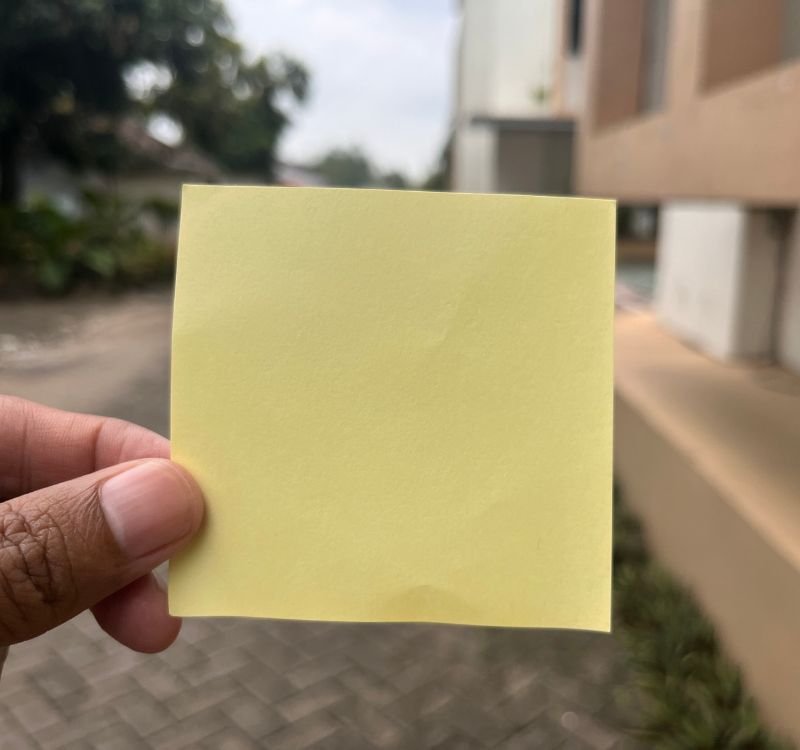
The small sticky notes start from around 5 cm on one side. They are square or rectangular, which makes them easily usable as a visual reference.
These can be found everywhere, homes, schools and offices – sticky notes. This length may be better represented by equating, for example, the 5 cm line with the side of a small note.
Why this helps: A close item in stationery gives you easy reference for how small measures appear.
A Matchbox
For instance, a small matchbox can have one of its dimensions to be approximately 5 cm. We have discussed various shapes and then we have brought in a compact rectangular shape because it is easy to compare with others of the same size.
A matchbox is a small box and you can observe it from the length, width or height – so different dimensions. And keep in mind, the whole box won’t necessarily be 5cm across all dimensions.
Why it helps: You likely have a matchbox in your house, so you can picture a measurement approximating two inches.
A Small Cookie
A mini cookie is about 5 cm across. Diameter is the length of a line that passes through the center of a circle, connecting one side to another.
Of course, there are many different sizes of cookies, so this is just a rough guess. A cookie baked at home can be either smaller or larger depending on the recipe and how much dough is used.
Where this helps: Food items are easily envisioned without skilling up into technical speak around measurements!
A Computer Mouse Detail
The curved or thin section of some computer mice is about 5 cm in diameter. A mouse is often far wider than this allows, so care must be taken to compare the correct part.
For example, if you use a mouse on a daily basis it would be easy to look at its shape and compare dimensions using an ordinary ruler.
Why does it help: This is a modern-day example aimed at those who work or study on a computer.
A Small Pocket Flashlight
Mini flashlights usually have a length of about 5 cm, but many models are longer. These small lights were intended to slip in a pocket, or purse, or grab when the moment arrives (having an emergency pack ).
Their small form-factor makes them a fitting demonstrator of a concise metric.
How it helps: Mini torch lets you visualize this much space if something is about 5 centimeters in size.
A Compact Perfume Bottle Cap
Small perfume bottles are a fraction of the base size, with caps that may be less than 5 cm tall (depending on your design). Some caps are very short, while decorative caps may extend longer.
If you have a perfume bottle in the house check out the lid and measure its height with a ruler to see if it is quite equal to this number.
Why it works: familiar objects that are small and personal-care Accessories help to visualize Measurements
A Pocket Hand Sanitizer
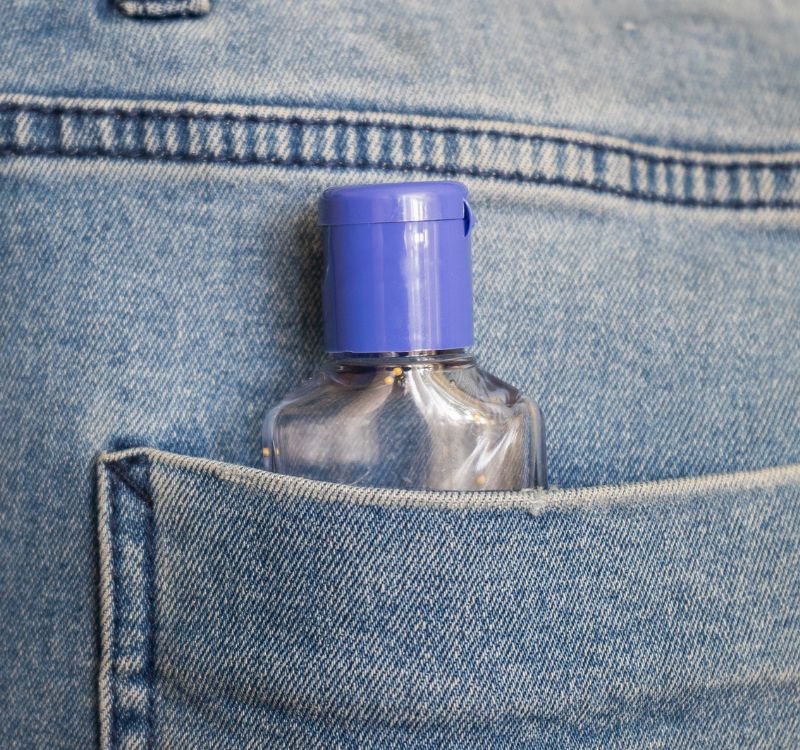
For example, a very small travel-size sanitizer container may measure approximately 5 cm. Still, most of the pocket sanitizers are taller so do check the product size before using it as a reference.
They are small enough to serve as practical examples of compact objects made for portability.
Why it matters: It illustrates how a measurement near 2 inches can show up in common travel paraphernalia.
A Small Sauce Bowl
The smallest forms have a diameter of about 5 cm. These are generally used to serve small portions of ketchup, chutney, dips or any other sauces.
The diameter is the distance across the opening, not the height of the bowl. Each bowl is its own unique shape, which means measurements will vary.
Why it helps: A small dish provides a simple mental image of a measurement in or around the circumference of an object.
A Compact Mirror
An occasional small round compact mirror might be 5cm across. Most compact mirrors are small enough to fit in a purse or travel bag but there are some larger models available.
If you have one, measure the distance across with a ruler from edge to edge through the middle to get its diameter.
Why it helps: because of its circular shape, you can easily visualize what 5cm wide looks like in real life.
A Small Juice Box Width
So a small juice box can have a width of pretty close to 5 cm on the package—depending on its size. There are those which cart through a narrow, and there are those which pass off wider cartons.
Juice boxes are interesting because they have flat sides, which can help us compare the shorter dimensions. Check the width and not height or depth.
Benefit: Links the measurement to something known from lunches, storefronts, and kitchens.
Read More:
How to Measure 5 CM Without a Ruler
You do not need a ruler to measure a small length all the time. You can make a rough comparison with familiar objects.
Now let us have some easy methods:
Visualize the five centimeters as a line roughly two inches long: Five centimeters is approximately 1.97 inches (that is, almost 2 inches).
Take a post-it note: verify if one side is near 5cm long in your paper.
An analogy: A match box – And side that is visible and serve as reference, keeping in mind that not all match boxes are same size
Verify with a familiar object: Use a small accessory for this subject, if you know its real dimensions it can give you an idea of the size.
More about this article Use a ruler: If it matters, when shopping or crafting or repairing something, measure.
You will learn the techniques that can significantly enhance your visual estimation skills. However, your hands and household items are not as accurate of a measuring tool so use a ruler whenever accuracy matters.
Why Is Knowing This Measurement Useful?
Being able to visualize what 5 cm looks like can be useful in a variety of daily situations. The most common instances of physical measurements displayed on eCommerce sites include dimensions for accessories, stationery, gadgets, or storage products (e.g., width x height in cm/inches).
Knowing even that 5 cm is almost 2 inches helps you to know if a small product might be what you want. It can also assist in organizing drawers, planning craft projects or checking the measurements of a small area.
The measurement is not just for shopping. You may learn about centimeters in a school project, or someone who sews, draws, or crafts might use them to plan out the tiniest piece of work.
Common Mistakes When Estimating 5 CM
Mixing up centimeters and inches is a classic mistake. Five cm is not five inches, it works out to literally less than two in., at a mere 1.97 in.
Trick #2 Mistaking all entries herein for being exactly 5 cm. A cookie, matchbox, compact mirror or sanitizer container may vary in size.
It should be clear that length, width, height and diameter are different things too. Even a small bowl can be 5 cm in diameter, but will not be a perfect cylinder at 5 cm tall. Verifying one appropriate dimension avoids mistakes.
Conclusion
So, How Big is 5 CM? It is identical to 50 millimeters, 1.97 inches ~ and 0.05 meters. Visualizing this measurement of less than 2 inches is done by comparing it with small every day objects.
Things like post-its, matchboxes, cookies and even compact mirrors are examples to follow in a size without needing numbers. Remember that these things are different, so they can help you estimate but not measure exactly.
After you become acquainted with this length, it will be easier to estimate short sizes whilst out shopping, arranging items or carrying on small-day projects.
Frequently Asked Questions
1. How many inches is 5 cm?
Five centimeters equals approximately 1.97 inches, which is just under two inches.
2. Is 5 cm big or small?
Five centimeters is generally considered a small measurement. It is easy to see and compare with everyday objects, but it is not a large length.
3. How big is 5 cm compared with 2 inches?
Five centimeters is slightly shorter than two inches. Two inches equals 5.08 cm, so the difference is only 0.08 cm.
4. Can I measure 5 cm with my fingers?
You can use your fingers to estimate the length, but finger sizes differ from person to person. A ruler is more reliable when you need an exact measurement.
5. What common objects are about 5 cm big?
Depending on their design, examples may include a small sticky note, a matchbox dimension, a small cookie’s diameter, or a compact mirror. Always check the item’s actual size for an accurate comparison.
6. How many millimeters are in 5 cm?
Five centimeters equals 50 millimeters. There are 10 millimeters in every centimeter.
7. Is 5 cm the same as 50 mm?
Yes. Five centimeters and 50 millimeters represent exactly the same length; they are simply written in different units.




Leave a Reply